By Isabella Marsh, Luxury Lifestyle Editor
Last updated: 11 June 2026
A handful of times a year, a major fight card lands in London and the city's nightlife bends around it. The arena crowd is tens of thousands strong, the ringside seats hold a concentration of famous faces that few other events can match, and when the main event ends, all of that adrenaline needs somewhere to go. It mostly goes west, into the capital's VIP rooms, and it arrives later and hotter than any other crowd in the luxury calendar.
Why Fight Nights Are Unlike Anything Else
The defining feature of a boxing night is the clock. Big cards build through an undercard and rarely crown their main event before midnight, which means the night out starts when most London nights are peaking. From experience, fight-night energy hits the West End in a single late wave: the rooms sit unusually quiet through the evening, then fill in a rush in the small hours, and the atmosphere carries the result of the fight with it. A dramatic finish makes the whole city feel lit; a dull points decision arrives flatter.
The crowd is its own blend, too. Boxing has become a genuine crossover cultural event, with the sport's overlap into fashion, music and celebrity well documented in GQ's coverage of fight culture. Ringside on a marquee London card you will find footballers, musicians, and the international set that flies in for the occasion, and that same mix re-forms in the clubs afterwards.
Fight nights deliver the latest, sharpest surge in London nightlife: quiet rooms at eleven, electric rooms at one, and a crowd still arguing about the scorecards at three.
The Shape of a Fight Night Out
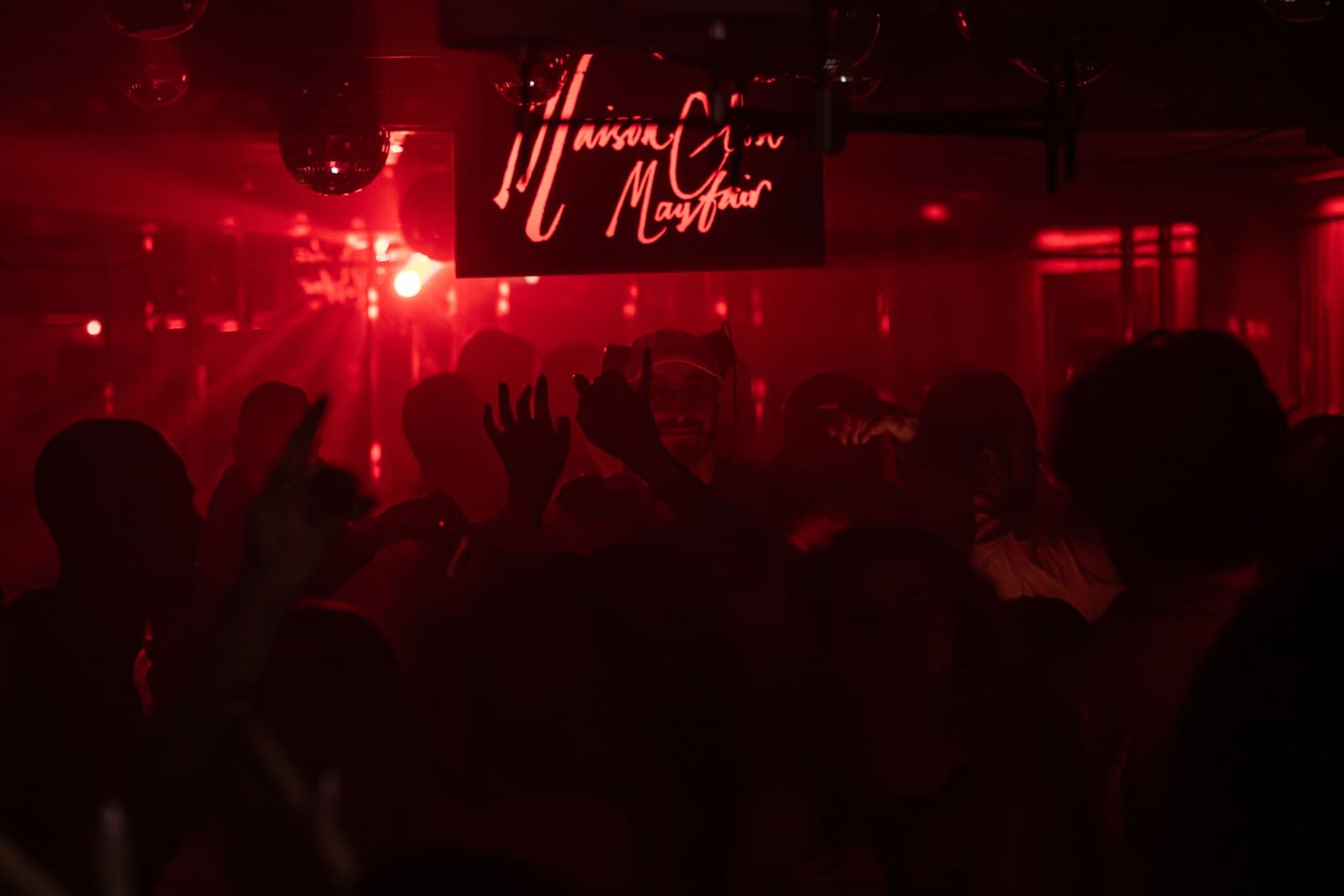
The fighters' own celebrations and the promoters' official gatherings are private affairs, arranged long before the first bell. What is open is everything around them: the established Mayfair rooms absorb the ringside overflow, and the atmosphere on a big fight Saturday is unmistakable even if you never saw the card. I noticed on the last marquee fight weekend that the room's rhythm ran a full hour later than an ordinary Saturday, with tables still being seated at a time when the night would normally be winding down.
For the celebrity-watching side of it, the same logic applies as on any headline weekend: the recognisable faces head for the discreet, established rooms we cover in our guide to celebrity nightclubs in London, and the busiest spectacle plays out in the bigger venues around them.
Fight Nights Against the Rest of the Calendar
Set against the season's other big weekends, fight nights are the rawest of the lot. The Grand Prix crowd is the most international, the premiere circuit the most choreographed, but a fight night is pure event energy: no dress theme, no daytime social calendar, just a single shared spectacle that ends late and demands a finale. It is also the least predictable, because the night's mood is written by the result.
How to Spot a Fight Weekend Coming
Unlike the season's fixed fixtures, fight weekends move with the sport's calendar, but the city signals them well in advance. The week before a marquee card, the promotional machine rolls through town: press events, weigh-ins that draw crowds of their own, and a noticeable uptick in international arrivals around Mayfair. By the Thursday, the good tables for Saturday night are going; by Friday, the late slots are the only ones left. As the Evening Standard's coverage of big fight weeks shows, the build-up is a city-wide event in itself. If you keep an eye on those signals, you can book ahead of the wave rather than inside it.
How to Plan Around a Big Card
If you are out in London on a major fight night, plan for the late wave rather than against it. Book your table for later than usual and expect the room to earn its energy after midnight, not before. If you are coming from the arena, pre-arrange the night's second act before the first bell, because you will not want to be negotiating doors at 1am with twenty thousand other people on the same mission. And if you simply want the atmosphere without the ticket, the established rooms carry the broadcast buzz all evening, then the real thing walks in after the verdict. Our guide to planning a luxury night out covers the booking mechanics that matter most on nights this busy.
Quick Reference - Big Fight Nights in London
- When: A handful of marquee cards a year, usually Saturdays, as of 2026
- The rhythm: Quiet evenings, then a single late surge after the main event
- Busiest window: Midnight to closing, the latest peak in the luxury calendar
- The crowd: Ringside celebrities, sport and music crossover, international visitors
- Access reality: Official after-parties are private; the main Mayfair rooms are open and carry the energy