London's nightlife in 2025 is in a genuinely strong position. The post-pandemic years brought closures and uncertainty, but what has emerged on the other side is a scene that is more refined, more confident, and more internationally relevant than it has been in years. The best clubs in London in 2025 are not simply surviving — they are evolving, and the new openings and emerging trends suggest a city that is reasserting its place at the top of global nightlife.
The Post-Pandemic Maturation
The pandemic did not just close venues temporarily — it forced a reckoning. The clubs that survived were the ones with genuine identity, loyal clientele, and operators who understood their audience. What reopened was leaner and sharper. Service standards improved. Programming became more intentional. The generic, identikit bottle-service rooms that relied on footfall rather than reputation largely did not make it back, and the scene is better for their absence. What remains in 2025 is a curated landscape where every significant venue has a clear reason to exist.
New Openings and Refreshed Venues
TABU London
TABUhas quickly established itself as one of Mayfair's most compelling new entries. Located on Berkeley Street, it brings a modern sensibility to the bottle-service model — the design is sleek and contemporary, the music programming is more adventurous than the Mayfair standard, and the crowd reflects a younger, fashion-conscious international clientele. TABU fills a gap that existed between the established institutions and the underground — it is unquestionably luxury, but it does not feel like a venue trading on legacy alone.
Luxx Club London
Luxx Club represents the new generation of immersive nightlife. Its LED-driven light installations transform the room throughout the evening, creating an environment where the visual production is as much a part of the experience as the music. This is a deliberate response to a crowd that expects more than a dark room with a DJ — the Instagram generation wants spectacle, and Luxx delivers it without sacrificing the fundamentals of sound quality and atmosphere.
Lio Club London
Lio Clubbrought the Ibiza dining-and-entertainment concept to London, and its arrival signals a broader trend. The format — a full dinner service with live entertainment that transitions seamlessly into a club night — has been proven in Mediterranean markets and translates well to London's appetite for complete evening experiences. Lio is not just a new venue; it is a new format for London, and its success is already influencing how other operators think about their programming.
The Dining-Meets-Nightlife Trend
This is perhaps the most significant shift in London nightlife in 2025. The traditional model — dinner at one venue, then a separate journey to a club — is being replaced by integrated experiences where dining and nightlife coexist under one roof. Maddox has refined this format over years, offering a restaurant experience that flows naturally into a club night without the disruption of changing venues. Lio Club has taken it further with theatrical entertainment woven through the dining service.
The appeal is obvious. Guests want convenience, they want the evening to feel like a single continuous experience rather than a series of logistics, and they are willing to pay a premium for venues that deliver this. For a detailed guide to this approach, see our dinner and nightclub guide.
Best Venues for the Complete Evening Experience
- Maddox — refined restaurant-to-club transition, live music
- Lio Club — theatrical dinner entertainment into late-night clubbing
- Dear Darling — cocktail bar that evolves into an intimate late-night venue
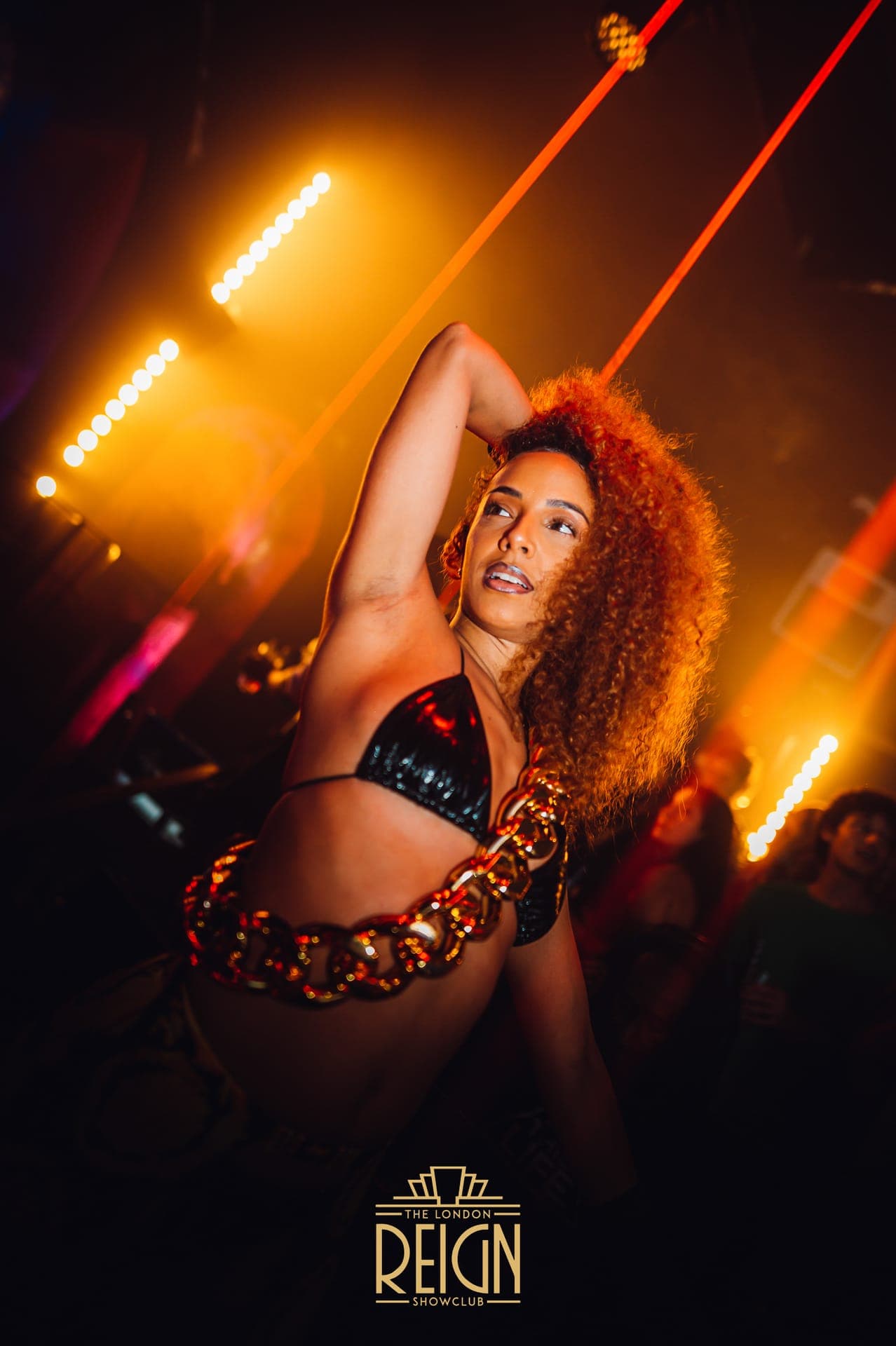
- The London Reign — multi-floor experience with dining, cabaret, and club
Music Trends in 2025
Hip-hop and R&B remain the dominant sound across Mayfair. Drake, Travis Scott, and Afrobeats artists continue to provide the soundtrack for bottle-service rooms, and there is no indication this is changing. What is evolving is the growing presence of house music in venues that previously played it rarely. Maddox incorporates house and disco elements into its programming, and Cuckoo Club's upstairs space has leaned further into house and electronic music. This reflects a broader cultural shift — house music's resurgence in mainstream culture has reached the point where even traditionally hip-hop venues are programming house-leaning sets on selected nights.
For dedicated electronic music, the institutions remain: Ministry of Sound continues to operate at the highest level, with a sound system and programming schedule that justify its reputation as one of the world's great clubs. The London electronic scene in 2025 is as strong as it has ever been — the challenge is that the best of it happens outside Mayfair.
The Immersive and Experiential Trend
Nightclub-goers in 2025 expect more than a DJ and a dance floor. The venues gaining the most traction are those offering something beyond the standard format. Luxx Club's LED light shows create an environment that changes through the evening. Cirque Le Soir continues to evolve its circus-theatrical concept, adding new performers and acts that keep even regular visitors surprised. The London Reign offers a multi-floor journey from cabaret to nightclub. This is not novelty — it is a fundamental expectation. The days when a dark room with a good sound system was sufficient are over for the luxury market.
Technology: WhatsApp-First and Instagram-Driven
The way people book and discover London nightlife has shifted decisively. WhatsApp has become the primary booking channel for Mayfair clubs, replacing email and phone calls. Table enquiries, guest list requests, and real-time communication about arrival times all happen on WhatsApp. This is particularly significant for international visitors, for whom WhatsApp is already the default communication tool.
Instagram, meanwhile, has become the primary discovery platform. Venues invest heavily in content that showcases their atmosphere, and potential guests make decisions based on what they see in Stories and Reels. The visual identity of a venue — its lighting, its crowd, its design — matters more than ever because it is being broadcast constantly. Clubs that photograph well have a genuine competitive advantage in 2025.
The International Market
London's nightlife is more international than it has ever been. Middle Eastern visitors, long a core demographic for Mayfair clubs, have returned in full force. The American market has grown significantly, driven by the favourable exchange rate and London's cultural cachet. Nigerian and broader West African visitors represent one of the fastest-growing segments, bringing an energy and spending power that venues are actively courting through Afrobeats programming and targeted marketing. For guidance on navigating London nightlife as an international visitor, our international visitors guide covers everything you need to know.
London's nightlife in 2025 is not recovering from the pandemic. It has moved past recovery into something more refined and more confident.
The Venues That Have Stood the Test of Time
Amidst the new openings and trends, the enduring strength of London's established venues is worth noting. Tape London remains the definitive Mayfair experience — its celebrity draw, its music-industry DNA, and its consistently electric atmosphere are undiminished. Cirque Le Soirhas been reinventing its format for over a decade and shows no sign of creative fatigue. Ministry of Sound, approaching its fourth decade, continues to attract the world's best DJs. Scotch of St James carries a heritage that stretches back to the 1960s and remains relevant through sheer authenticity. These venues have survived economic downturns, pandemics, and the constant churn of London's hospitality industry because they offer something genuine rather than fashionable.
Pricing Trends
Minimum spends have increased across the board — inflation, rising operational costs, and strong demand have pushed table minimums up by roughly 15–20% compared to pre-pandemic levels. A standard Saturday table at a top Mayfair venue now starts at £1,500–£2,000, up from £1,000–£1,500 a few years ago. However, the value proposition has arguably improved: service is better, production standards are higher, and the overall experience is more polished. For a full breakdown of current pricing, see our Mayfair cost guide.
What to Watch for the Rest of 2025
Several developments are worth monitoring. The continued growth of the dining-nightlife hybrid model suggests more venues will adopt this format. House music's creep into Mayfair is likely to accelerate, potentially creating dedicated house nights at venues that have historically been hip-hop-only. The summer season — always London's strongest period for nightlife — will test whether the new openings can sustain their momentum against established competition. And the international visitor market, particularly from the Gulf and West Africa, will continue to shape programming and pricing.
London nightlife in 2025 is not just alive — it is thriving with a clarity of purpose that was absent five years ago. The venues know who they are, the audience knows what it wants, and the gap between expectation and delivery has narrowed to the point where a well-planned night out in this city is genuinely world-class. If you want help navigating the current scene — get in touch. The landscape has changed, and we know every corner of it.