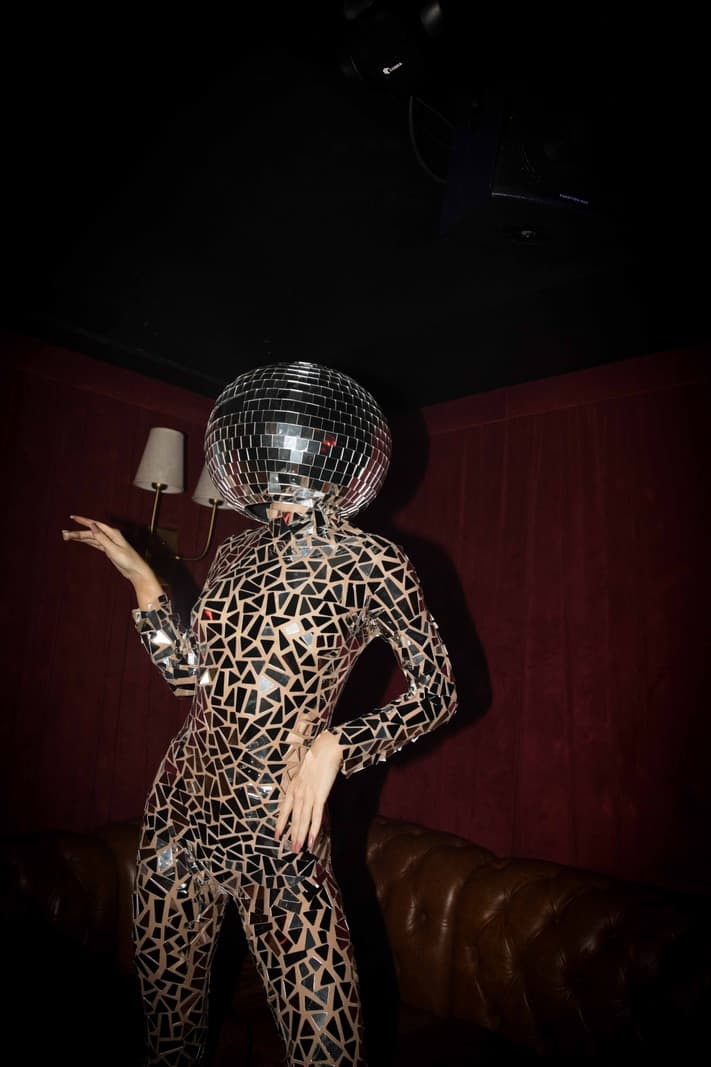
London's luxury club scene has always made room for spectacle. Fire-breathers at the door, confetti cannons at midnight, performers on platforms above the dance floor. But something has been shifting over the past two years. The venues generating the most conversation among the city's wealthiest regulars are not the loudest or the most theatrical. They are, increasingly, the ones you might walk past without noticing. This is quiet luxury applied to nightlife, and it is reshaping where serious money goes after dark in London's most exclusive circles.
What Quiet Luxury Means After Dark
In fashion, quiet luxury means no logos, no branding, quality that speaks for itself. Translated to London's club scene, the principle looks similar: understated interiors, considered music programming, and a complete absence of velvet rope theatrics.
Dear Darling in Mayfair is the clearest example. Its ground-floor cocktail bar operates with the confidence of a standalone venue, drawing a well-dressed crowd that drifts naturally toward the club floor as the night deepens. Nothing about the exterior announces what is inside. The doorway is easy to miss, the signage minimal, the experience intentionally intimate. This is a place designed to reward those who already know where it is.
Selenetakes a different approach to the same philosophy. The interiors lean modern and design-forward, the music programme shifts between R&B and soulful house depending on the night, and the crowd skews international and slightly older. It does not try to impress with scale. It impresses with precision.
The design philosophy extends to details that most guests feel rather than notice. Lighting sits warmer and lower than at production-focused venues. Sound systems are calibrated for clarity at conversational volumes, not just peak output. Even the staff-to-guest ratios run higher, meaning service feels personal rather than transactional.
Moving Beyond the Theatre Model
For most of the 2010s, London's premium nightlife was defined by production. Cirque le Soir built its reputation on circus performers and surreal staging. The Box pushed the boundaries of what a club could present on stage. These venues remain excellent at what they do, and they continue to draw crowds who value high-energy spectacle.
But the newer venues opening in Mayfair and beyond are choosing a different path. Maison Close operates at lower capacity than its neighbours, favouring quality of experience over volume. Rex Rooms brought a refined Chelsea sensibility to a scene long dominated by Mayfair, with interiors that feel more like a private residence than a commercial venue. Luna, tucked into a Mayfair side street, is deliberately low-profile. Its regulars prefer it that way.
The pattern is consistent: smaller rooms, better sound, fewer guests, higher spend per head. Where the theatre model optimises for maximum covers and bottle sales, the quiet luxury model optimises for per-guest experience. The financial logic still works, sometimes better, because discretion commands a premium.
The most exclusive clubs in London are no longer the ones everyone knows about. They are the ones that prefer it if you don't.
Privacy as Currency
The shift toward discretion is not accidental. Social media changed the equation. A decade ago, being seen at the right club was the point. Now, for the clientele these venues serve, not being seen is worth more.
International visitors, particularly from the Gulf states and East Asia, have long valued privacy in their leisure time. London's quiet luxury clubs cater directly to this preference. Tables are positioned for seclusion. Photography policies are actively enforced rather than merely suggested. The atmosphere discourages the performative social media behaviour that defines louder venues.
Corporate entertainment has followed the same trajectory. The days of taking clients to the most recognisable club in Mayfair are fading. Smart hosts now choose venues where the conversation can continue past midnight, where the atmosphere signals sophistication rather than excess, and where the name of the venue does not overshadow the purpose of the evening. Our corporate entertainment guide covers the specifics of planning these evenings.
What This Means for Your Night Out
If you are considering one of London's quiet luxury venues, the approach differs from a standard Saturday night. These clubs reward earlier arrival. The atmosphere at 10:30pm is part of the design, not a warm-up act for midnight. Arriving early gives you the full arc of the evening, from cocktail-bar calm to the gradual build of the club floor.
The dress code at these venues has not relaxed, but it has shifted in tone. Smart remains essential. The difference is that the emphasis falls on fit and fabric rather than flash. Think well-tailored and considered, not attention-seeking. Venues like Maddox set the standard here, where the crowd dresses with the kind of quiet confidence the club itself projects.
And expect to be able to talk. These rooms are engineered for it. The music sits at a level that supports the atmosphere without obliterating conversation. For many guests, particularly couples and small groups, this is the single biggest draw.
The price point has not dropped. If anything, it has risen. What you pay for at a quiet luxury venue is not spectacle or celebrity adjacency. You pay for space, discretion, and a standard of service that treats every table as though it matters.
Quick Reference - London's Quiet Luxury Shift
- Venues leading the trend: Dear Darling, Selene, Maison Close, Rex Rooms, Luna
- What defines it: Understated design, lower capacity, privacy-first
- Who it serves: International visitors, corporate hosts, couples
- Price range: Comparable to or higher than theatrical venues
- When to arrive: 10pm-10:30pm for the best experience